
Every B2B SaaS founder remembers a deal that looked inevitable.
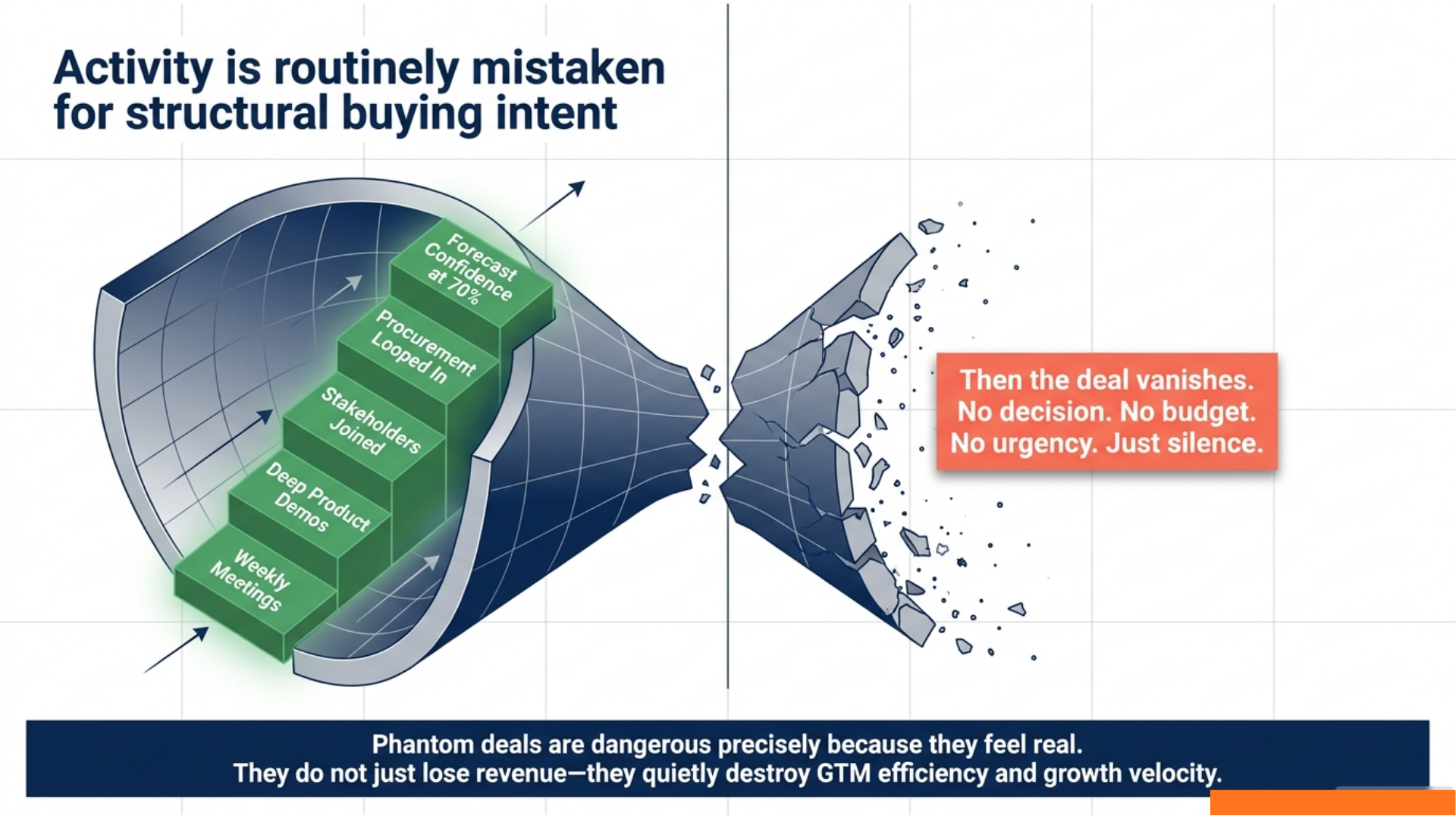
The prospect engaged early. Meetings happened weekly. Product demos went deep. Internal stakeholders joined the calls. Procurement was “looped in.” The champion sounded excited. Forecast confidence rose from 40% to 70% to “almost done.”
Then the deal vanished.
No decision.
No budget.
No urgency.
No closure.
Just silence.
What makes these situations dangerous is not the lost deal itself. It is the illusion of momentum that surrounds it. And in SaaS companies especially founder-led sales organisations these phantom opportunities quietly destroy GTM efficiency, forecasting accuracy, product focus, and growth velocity.
This is not just a sales problem.
It is a company-building problem.
The Hidden Revenue Leakage Most SaaS Companies Ignore
When founders think about revenue leakage, they usually think about:
- churn,
- pricing,
- low conversion rates,
- or poor retention.
But one of the largest hidden leakages in B2B SaaS is pipeline misallocation.
Teams spend massive amounts of time working opportunities that were never structurally capable of closing.
And the cost compounds everywhere:
- Sales capacity gets wasted
- Forecasts become fiction
- Investors receive misleading signals
- Product roadmaps get distorted
- Hiring decisions become reactive
- CAC quietly increases
The damage is operational, financial, and strategic.
The Anatomy of a Phantom SaaS Deal
Phantom deals are dangerous because they feel real.
In fact, the earlier stages often look healthier than legitimate opportunities.
The prospect responds quickly.
Calls are engaging.
The buyer asks intelligent questions.
Stakeholders attend demos.
The company requests proposals.
Activity becomes mistaken for buying intent.
But underneath the engagement, the foundations required for an actual B2B purchase never exist.
Listen to podcast https://open.spotify.com/episode/7s8FvRwaZ5Fh8ZNFtjnJrh?si=nmiuciqgRt-5biVZsmD6mg
SaaS #RevenueLeakage #GTM #B2BSales #FounderLedSales #PipelineHygiene